Competitor analysis in AI search
Competitor analysis in ChatGPT and every other AI answer
Competitor analysis in AI search starts with one question: when a buyer asks ChatGPT for the best tool, whose name comes back? CueScout checks your buying questions on each engine daily, ranks you against every competitor you track, and keeps the pages that put them in the answer, so you can see why they win.
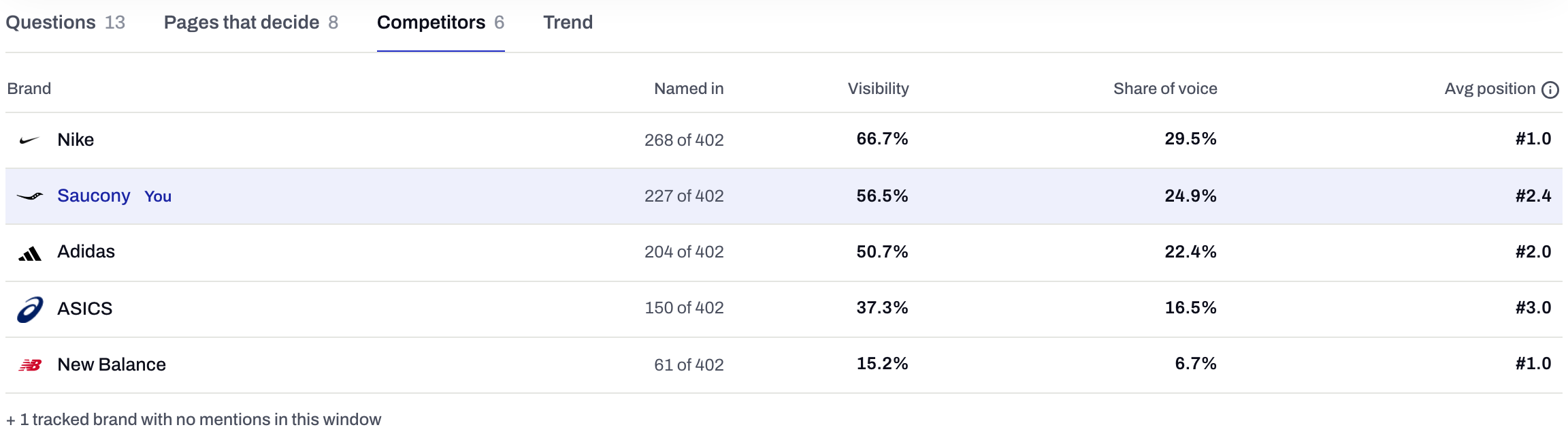
- 1Every rival, measured on the same answers
- 4
- numbers per competitor: named in, visibility, share, position
- 4
- windows to compare, from 28 days to 12 months
- Daily
- answers counted for every rival
- 10
- brands on Growth, each with its own competitor list
Why competitor analysis needs the AI answers
You hear about it on a call
Most teams learn a competitor owns the AI answer when a prospect mentions it. By then the shortlist was written weeks ago.
One page can carry a rival
A single comparison page or review listing is often why a competitor gets named. You have probably never seen it.
Share of voice alone says nothing to do
A percentage shows the gap. The cited pages show where to close it.
Your competitors, answer by answer
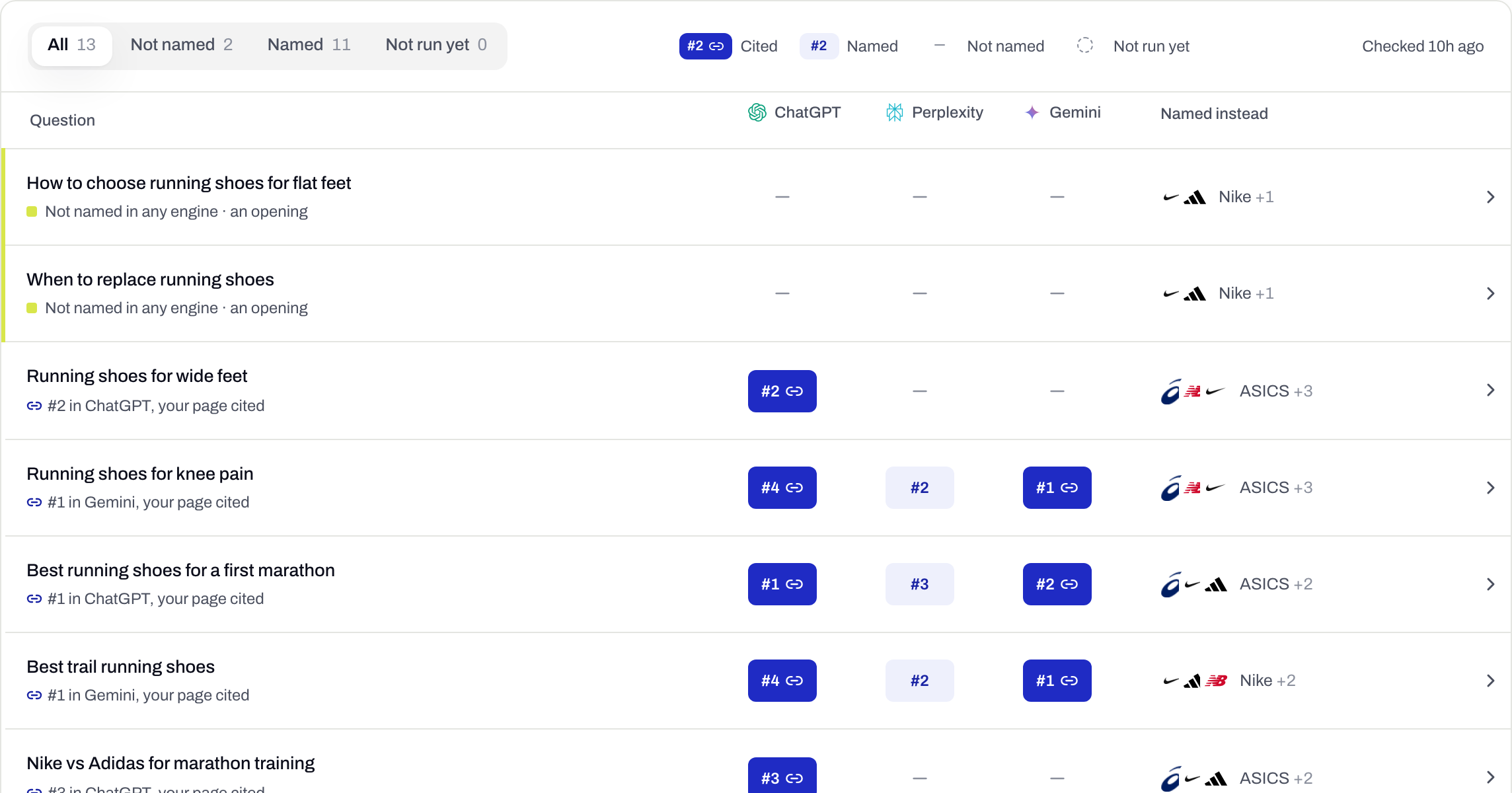
Named instead
Who the engine picked when it skipped you
Each question lists the brands named in your place. When one rival keeps appearing where you are missing, start there.
Per rival
Four numbers you can compare
Measured on the same answers as yours, so the gaps are real.
- Named inx of y
- Visibility%
- Share of voice%
- Average position#
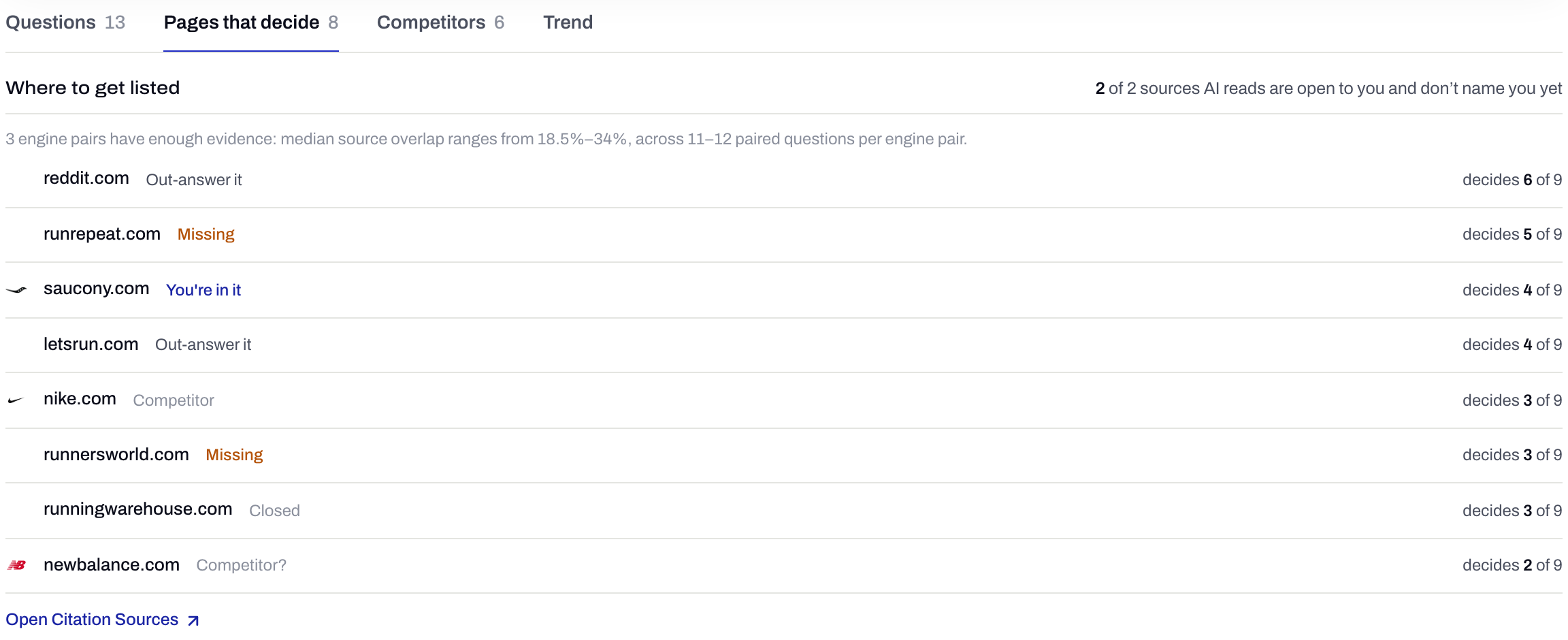
Their sources
The sites that decide your category
Rolled up by domain: how many answers each site decides and whether it is open to you, missing you, a competitor’s own, or closed.
How it works
Included on Starter (up to 2 brands) and Growth (up to 10). Each brand keeps its own competitors.
Compare plansAdd the competitors you care about
List them by website in Settings. CueScout can suggest a few from your category when you set up.
Track share of voice
Every check records which brands each answer names, so your share sits next to theirs by engine and over time. See AI share of voice.
Open the pages behind their mentions
The cited pages show why they were picked: a roundup, a review listing, their own comparison page.
Decide where you can compete
Some gaps are a listing you can claim. Others need a fair comparison on your own site. Each lands in To-dos with the evidence attached.
What it doesn’t do
- Share is measured on your tracked questions only. A narrow question list gives a narrow picture.
- Brands are read from the answer text, so an answer that names no vendors counts for nobody.
- A rival leading on these answers is not a market-share figure.
Questions
How do I see which competitors ChatGPT recommends?
Ask it the buying questions in your category and note the names. CueScout does that daily on each engine your plan covers and keeps the answers.
How is share of voice calculated?
Answers that named a brand divided by all answers in the window, for you and each competitor on the same answers.
Can I track competitors on Grok or Claude?
Yes, with the add-ons. Claude is a paid add-on, and the Grok pack checks 20 questions you pick each week.
Should I write comparison pages about competitors?
When answers for "X vs Y" or "alternatives to X" cite a page and yours is missing, a fair comparison on your own site is often the most direct fix. Keep claims about other vendors dated and checkable.
Related use cases
All use casesSee what the AI answers say about you
Your first check is free, with no signup to start.