GEO strategy
A GEO strategy built from the answers you are missing
A GEO strategy decides which pages to write or fix so AI answers start naming you. CueScout builds it from evidence: the buying questions where engines name competitors and not you, the pages they cite instead, the questions buyers repeat in public threads, and your Search Console data. Each gap becomes a To-do with its reason attached.
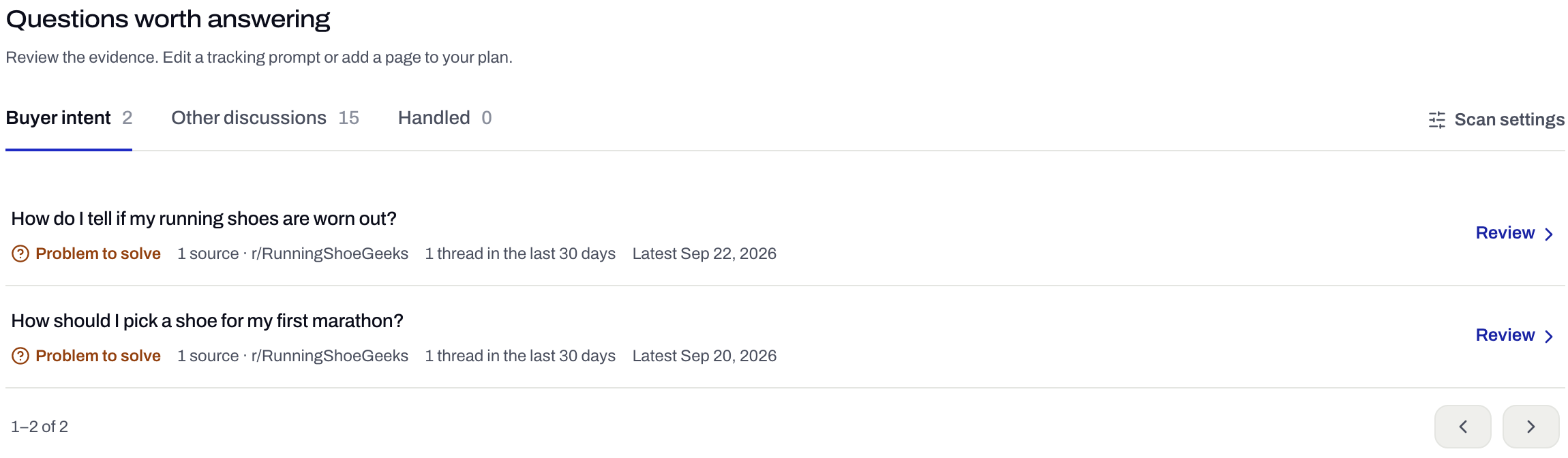
- 1Sorted by buyer intent
- 2How often buyers repeat it
- 4
- evidence sources: AI answers, cited pages, forums, Search Console
- 3
- steps in every To-do brief
- 1 click
- from a cited page or a question to a To-do
Why a content calendar needs a GEO strategy
Keyword volume misses the assistant
Keyword tools tell you what people search. They cannot tell you which questions an assistant answers without you.
The format is already decided
The pages an engine cites show what a good answer looks like to it: a comparison, a pricing table, a how-to. Write against that.
Nobody checks if it worked
Pages ship and the calendar moves on. Without a recheck you never learn which formats earn citations.
Where the GEO strategy comes from
Buyer questions
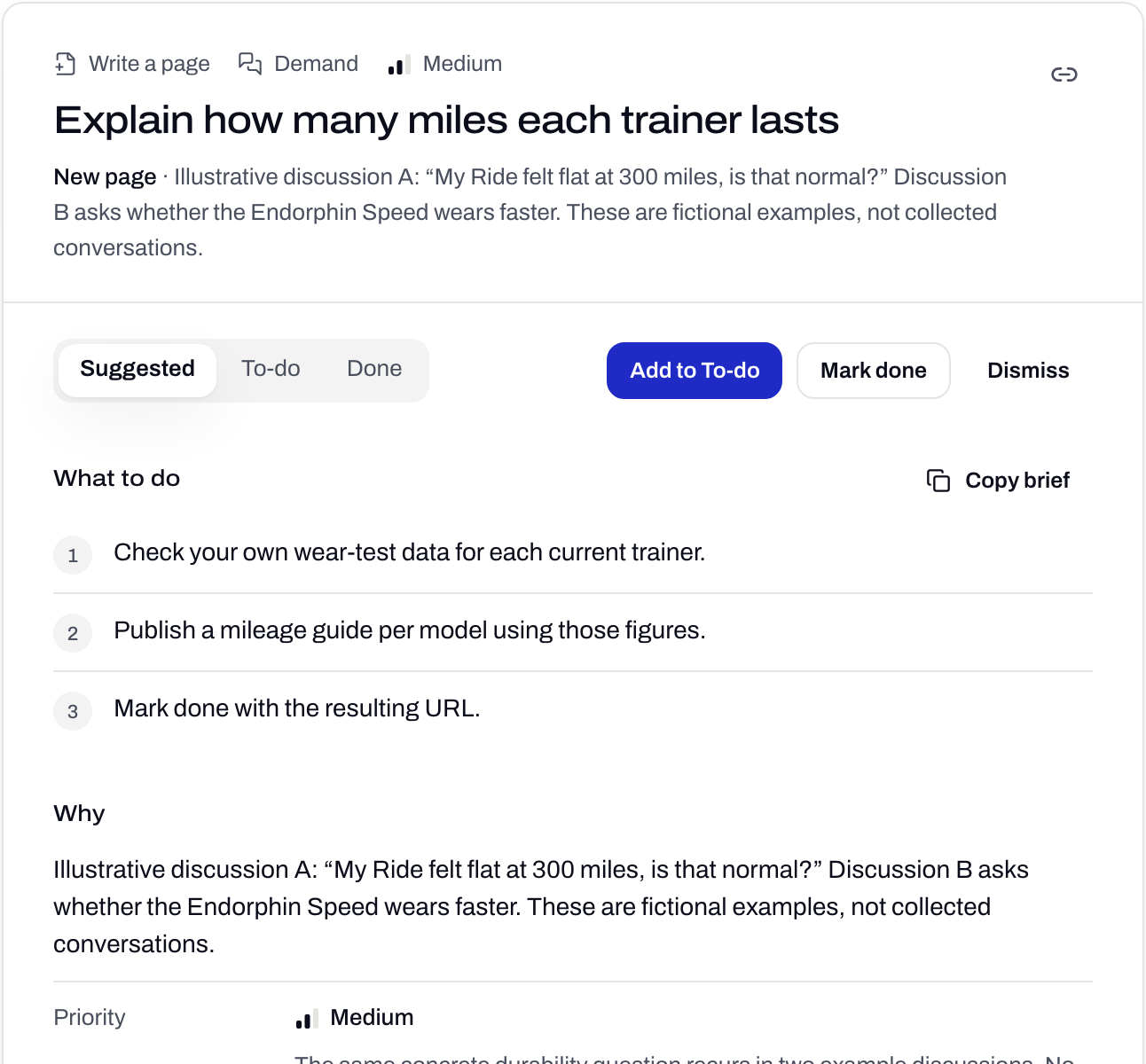
A page for a question buyers keep asking
Questions that repeat in public threads become Write a page To-dos, with the wording, the reason and three steps.
Formats
What the engines tend to cite
Read the cited pages for your questions before you brief a writer.
- Comparison pages
- Best-of roundups
- How-to guides
- Pricing and spec tables
- Community threads
Search demand
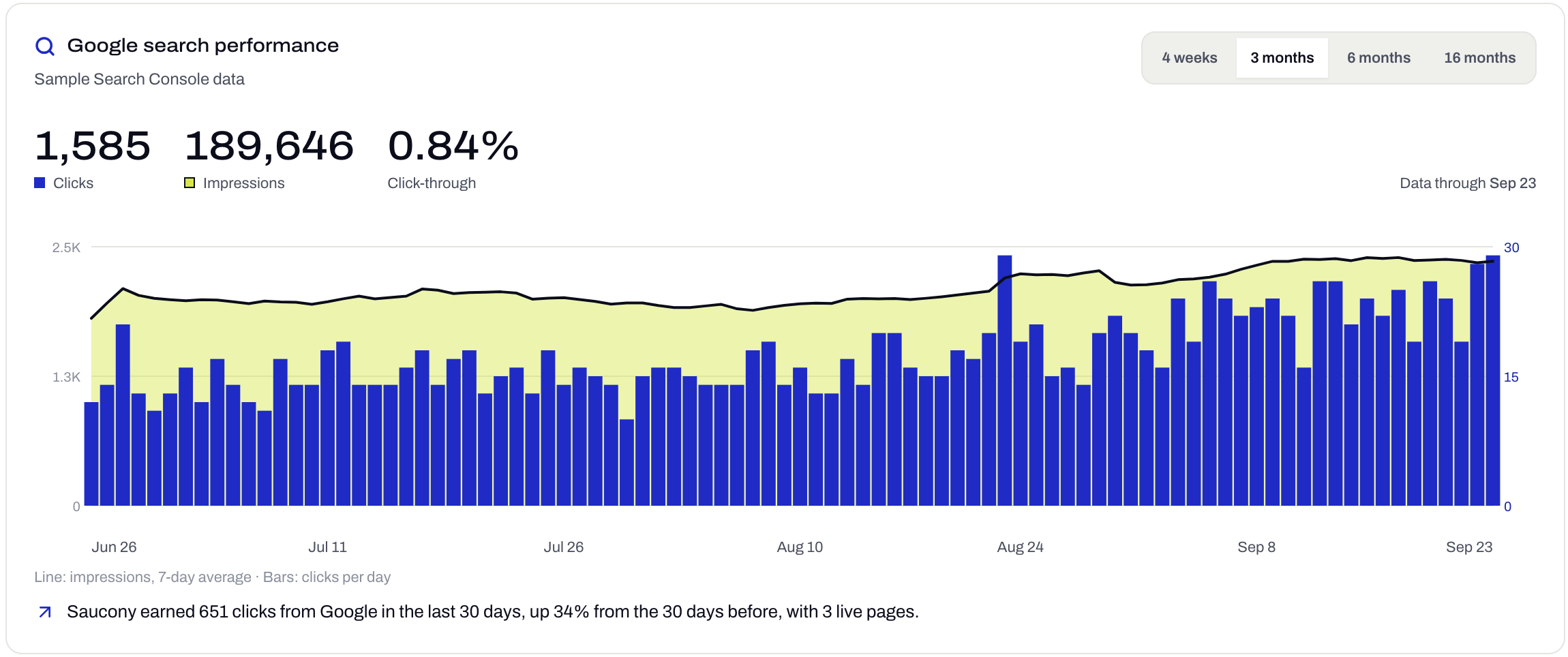
Your Search Console next to the AI gaps
Connect Search Console and the queries you already get impressions for feed the same queue. Near misses on page two become Update a page To-dos.
Find the missing answers
Questions where the engines name competitors and not you are the first candidates. AI visibility tracking lists them.
Read what gets cited
The cited pages for each question show the format and depth that engine prefers.
Add your own demand
Search Console queries and repeating forum questions join the same queue, so one list holds all the evidence.
Ship it and keep checking
Mark the To-do done with the URL you published. Later checks show whether the engines start citing it, though a change on its own does not prove the page caused it.
A GEO strategy against a keyword-led content plan
| Aspect | Keyword-led plan | GEO strategy |
|---|---|---|
| Starts from | Search volume | Answers that leave you out |
| Brief says | Target keyword and word count | The question, the pages cited, the format that wins |
| Success | Rank position | Named or cited in the answer |
| After publishing | Rank tracking | The same questions checked daily |
What it doesn’t do
- CueScout does not write the articles. You or your team write them and publish through your own CMS.
- A later citation is an observation, not proof the page caused it.
- Search Console To-dos need a connected property with enough data to say anything.
Questions
What is a GEO strategy?
A plan for generative engine optimization: which pages to create or improve so AI answers name and cite your brand, based on where you are missing today.
How are To-dos ranked?
By the evidence behind each one: how many answers leave you out, how often the question repeats, and whether you already get search demand for it.
Does CueScout write the content?
No. It tells you what to write and why, with the sources attached.
How do I know a page worked?
Mark the To-do done with its URL and keep tracking the prompts. Later citations are recorded as observations, not as proof.
Related use cases
All use casesSee what the AI answers say about you
Your first check is free, with no signup to start.